Showing posts with label internal family. Show all posts

Monday, June 9, 2014

Birthday Reflections

So I'm reading The Fault in Our Stars for book club, which is told from the perspective of a 16 year old girl with cancer, and guess what? I still talk like a teenager. Yup. Some of her comments could have come straight from my blog.

Even though I turn 45 today, I guess I can consider this a compliment, since this is a best seller with a movie that is a box office hit and has gotten great reviews. So if I sound immature, at least it's in a way that people can relate to. And if you've read the book, then you know that Hazel Grace is no ordinary 16 year old. For example, she refutes the adage that without pain, we cannot know joy by pointing out that "the existence of broccoli does not in any way affect the taste of chocolate." I love that!

Still, I find it ironic to discover that I still talk like a teenager as I hit what is irrefutably middle age. I thought I would be OK with it, because it's not like I didn't know I was middle-aged. And as long as I don't hit a prime number, I'm usually fine. And 45 is divisible by 3 and 5, so I figured I was safe until I turned 47. But no. Mother Nature likes to rub it in your face that you are becoming an old lady, and I received a couple of early birthday gifts just to make sure I was aware of this. 

Before someone sends me that quote about how old age is a privilege that not everyone gets to benefit from, let me preempt you by saying that I am grateful for my life. It's just that signs of getting older bring up that feeling that I talked about in the Beginnings and Endings post. Sadness about the loss of gifts that I had not even been aware of until I began to lose them. Anxiety about the losses to come. Panic about how fleeting time is. 

I am afraid I am not one of those brave souls who will embrace aging with grace and dignity. I'm pretty sure I'm going to go kicking and screaming, fighting it every step of the way. I guess this is one of the downsides of being a warrior

I've been thinking about what I could say in this post for several days now. I was really struggling with how to make it positive, since my goal is to be honest, and I have honestly been in a place of sadness and anxiety about getting older. 

But I pray about blog posts, too. I pray that God will give me the inspiration to come up with something to say that will be helpful to someone, even if that someone is just me. So far, God has always answered this prayer. Today was no exception.

This morning, as I warned my inner critic that it was not allowed to make me feel guilty about sleeping in on my birthday, I leisurely checked out my birthday messages on my phone and FB, and I was humbled by how many of them there were so early in the morning. Well, early in the morning for me, at least. And I got the message: the one gift that will grow with age is love. 

The feelings of love that I have for others will only deepen, as will their love for me. And as I get older, the more people I include in the circle of who I care about. Blogging, which I also consider a gift from God, has dramatically increased the number of people who have been brought into my life. So I have a great deal of love to look forward to, for as long as I may live.

Plus, I will always have an inner infant, Sophie, and now a teenager, as well as a slew of other parts in my internal family. They are always vying for my attention, letting me know that they are there, whether I want to hear from them or not. Through the process of blogging--and aging--I am learning that these parts I've been at war with also love me, although they show it in ways that are sometimes annoying.

So I am thankful to God, and to all of you, for reminding me on my birthday how blessed I am with love.

Wednesday, May 7, 2014

The Inner Infant

So my inner child, Sophie, has a younger sister. She is an infant and doesn't have a name yet. While my relationship with Sophie is pretty good, I confess, I'm a terrible mother to my infant. But I'm working on it.

It's easier to enjoy Sophie because she is playful, funny, cute, and full of energy. But like most kids, she can be a brat and gets on my nerves sometimes. And she doesn't like it when I'm alone. She's afraid something bad will happen to us. She advocated for my last relationship and was terribly anxious whenever she thought we might break up. It took awhile before I learned how to comfort her and assure her that I can take care of her by myself.

I only became aware of the infant about a year ago--mainly because I was neglecting her so badly it was affecting my health. I wouldn't feed her when she was hungry. I wouldn't soothe her when she was upset. I yelled at her when she cried for no reason. If Social Services could have seen how I was treating her, they definitely would have intervened. After awhile I was having so many physical problems that I was forced to attend to her needs. It was starting to affect my tennis.

I've had to get to know my infant the same way any parent gets to know their child: by paying close attention. You don't automatically know which cry is the hungry cry, the poop cry, or the tired cry; you learn from experience. She is usually upset when I wake up on the weekends because I sleep in and throw off her feeding cycle. So if I'm feeling depressed or anxious when I wake up, I get something to eat because she's probably hungry.

Or she could be crying because that's what infants do when they wake up--especially after a nap. It's funny that we just accept that young kids cry when they wake up without understanding why and without being mad at them for it. I wonder at what age we start expecting people to have a good reason to cry.

I guess some people do acknowledge that they're in a crappy mood when they wake up and turn to things like coffee, cigarettes, and drugs to calm them down. Those are not good ways to comfort a baby, though. And maybe they're not ideal for us, either, really. But that's for another blog post.

She also gets upset whenever I'm rushing around, which is essentially all the time. She is very sensitive to transitions: leaving for work in the morning, rushing to a tennis match, rushing to the grocery store. I have no idea why. Maybe my stress upsets her. Or maybe I'm neglecting her when I'm on the run. This is the distress that is the hardest for me to be compassionate about.

So now there's this mantra I have to say multiple times a day to soothe her: It's OK. Everything's going to be OK. You're fine. Everything's going to be fine. And when I'm frustrated, I add although I have no idea what you're anxious about!  It's a process, accepting that she deserves to be upset and comforted, even when it doesn't make sense to me.

I know this probably sounds silly to some of you, but it works really well. I use this analogy often with clients as a way to get them to pay closer attention to what they need, to honor their feelings, to have compassion for themselves, and to learn how to take better care of themselves. It can work surprisingly quickly, once you reassure them that having all these parts doesn't mean they're crazy.

So if you ever find that you are arguing with yourself, or that you're frustrated because your thoughts/feelings/actions don't make any sense, you might want to ask what part of yourself you might be neglecting.

Monday, May 5, 2014

Self-Compassion

My compassion reserves are running low. In my last relationship I took the words of Jesus and Buddha literally about how we should be able to love everyone. It was practically a 3 year exercise in compassion. But by the end I wondered if perhaps I had misunderstood what they meant about loving others. It was a lot of work to have to channel Buddha and Christ just to tolerate being in his presence. I feel like I'm experiencing a backlash now. All those feelings I tried to deny are coming out with a vengeance. I guess I was supposed to have compassion for myself, too.

I'm not very good at self-compassion. Every time I try, the Inner Critic berates me for whining about my problems when I have a good life. I don't know what pain is. I'm not living in a war-torn country. My life hasn't been devastated by natural disasters or school shootings. All of the people I love are still alive. Who am I to complain? 

But surely I must have the right to honor my feelings. My suffering must count, too, if God cares about all of us. So I'm going to write about what's upsetting me, without apologizing for it or justifying it or willing myself to be positive. 

This week I will be moving closer to divorce. Filing forms. Getting documents notarized. More tears. More snot. You would think there would be a limit to how much it's possible to cry over something. That 4 years would be more than enough time. I used to pray to God--plead, even--to tell me what I could do that would allow both of us to be happy. Leaving seemed like it would just make us both miserable. And it has. And I don't see an end in sight for me, at least. I'm trying not to blame God or myself. But in this moment, my faith in a happy future is wavering and I feel like I deserve the pain.

I have 2 family members who are currently on the opposite ends of the bipolar spectrum. My brother is trying so hard but still feels terrible.  It hurts me that he's hurting. My dad is manic. Mania feels great for the person experiencing it, but it's hell for the rest of us. But what power do I have to make him see?  If he were my client, I could make him see our psychiatrist, get him on meds. But as a daughter, I am practically useless.

I'm afraid to answer the phone when my parents call. Which makes me feel horribly guilty, because I know their time on earth is limited and I will regret not talking to them more when they're gone. But the call is almost always about something bad. Something I'm expected to fix. Or something I don't want to do. At minimum, I'm supposed to be a receptacle for the stress, but I can't take it. It's too much. I'm not able to function afterwards.  

So I have to be strategic about when I call or when I answer. It has to be a time when it will be OK if I fall apart. But since it's hard to choose something where there's a good chance you'll fall apart, I often forget to call altogether. Which makes me feel even guiltier and reactivates the vicious cycle. I wish it could be easier. I wish there were some way I could be a good daughter but also protect myself. 

It takes a lot of work to maintain my health. Since I have GERD, allergies, and exercise-induced asthma, I have to take shots, nasal sprays, pills, steroid inhalers, rescue inhalers. I'm not supposed to have coffee and chocolate. I can't eat or drink 3 hours before exercise or bed time. If I drink too much during a match, I'll even throw up water. It's frustrating to have to worry about throwing up every time I play. Or brush my teeth, even. But giving up dental hygiene and tennis are not options.

My mental health is always hanging in the balance. It's work to maintain my sleep cycle because of my night owlness. I can't miss any of my drugs. I can't miss Ativan for even one night. I meditate, pray, journal, exercise, and all of the other self-care strategies. But despite my best efforts, I can never make it to the end of the term without burning out before I cross the finish line. I can't handle the stress of my life. I can't get out of bed right now. It makes me feel weak. Inadequate. Unable to do the basic tasks of life.

Just got a call from my lawyer friend that my paperwork looks good to go, so I guess I'll be filing for divorce this week for sure. If you believe in God, feel free to say a prayer for me. If you don't, send positive vibes my way.

Tuesday, April 22, 2014

Grace

I've received a lot of comments from readers lately about being too hard on myself. Which is a little scary, because these comments were in response to posts where I purposely avoided criticizing myself. But perhaps people know me well enough by now to know what I'm thinking, even if I don't say it out loud.

It's hard to be honest about how these comments make me feel, because I don't want to seem ungrateful. But if I'm afraid to say it, that probably means I should say it.

When I read comments that are meant to be supportive, I feel a little angry and defensive. I feel like I'm being told that I'm failing at self-improvement. The words forgiveness, self-compassion, and self-acceptance are in almost every single post, so it's not like I don't know that's my problem; I'm just not getting better at them fast enough, apparently.

This morning as I was driving to work, I realized something about my reaction to these comments. I realized that they are hard to take in because it's hard to take in love--love from others, love for myself, and love from God.

I have spent the last week in an email exchange with a loyal reader and friend who is trying to convince me that I don't need to work so hard to earn God's approval because God already loves me just as I am, in all of my glorious imperfection. I know that's true for other people, but something in me resists believing that it's true for me.

You would think it would be a relief to hear the thing that you most want to hear, but it often isn't. You don't want to let yourself off the hook. You don't want to risk being too full of yourself. You might get complacent. You might become a sloth--which is a deadly sin.

That's how the Inner Critic is for people like me. It's like an abusive partner who does everything it can to make you feel bad about yourself as a way to keep you dependent on it. It uses the language of morality and turns it against you.

In therapy I address this part by telling clients that once they leave my office, the Inner Critic will try to undo all of the progress we have made. That perhaps it is even talking to them now while we are in session, telling them not to listen to me. It helps to let them know that I know all of its tricks.

I also tell clients that accepting love is a gift, and rejecting it hurts the giver. These clients are highly motivated to do good, so it is often eye-opening to reframe self-criticism as a form of rejecting others.

When I thought I could blog my way to self-acceptance, I assumed that sharing my vulnerabilities with the world would be sufficient. It helps, but it's not enough. Without feedback from others, it's still just me and the Inner Critic, duking it out.

In therapy, I tell clients that they are worthwhile as many times as it takes for them to believe it. Maybe that's how blogging works, too. I will continue to write about what my demons say, and readers will keep telling me that I'm being too hard on myself, and I will get pissed off, but eventually I will believe them. Maybe one day the Inner Critic will lose its power to make me feel bad about myself.

Maybe God works through blogs, too.


Thursday, April 17, 2014

Losing Control

I am seeing a couple of clients whose lives revolve around not losing control of their emotions. They both have a parent who is very out of control--addictions, emotional outbursts, marginally functional--the kind of people who seem beyond hope. "Black hole people," as my client calls them. These clients fear that if they let their emotions out, they will get lost in them like their parents.

This is a common fear. Most people think that having feelings makes you needy. Weak. Crazy. It's better to do whatever you can to avoid feelings altogether. Ironically, it is the things that people do to control their feelings that brings them to therapy.

Eating disorders are a good example of this. Every client says that their eating disorder began as a way to have control. They can't control any other aspect of their lives, but they can control what goes into and comes out of their bodies. Stuff down their feelings with food. Numb themselves by restricting and exercising. Get rid of feelings by purging.

At some point they lose control over this strategy. They think about food, exercise, bodies, and weight all day long, every day. They eat in isolation. They lose friends because they are constantly lying and hiding. When it gets really bad, a dean forces them to come to the counseling center. But no one can help them until they are willing to let go. Until they are willing to feel, to be vulnerable.

We all have ways that we try to control our emotions. Mine is to help other people. I don't have problems. I don't need anyone. I've got all the answers; I don't need help.

A client recently asked if I had any flaws. I told her that I have all kinds of flaws. She seemed relieved. I almost told her about my blog--but I'm not ready to go that far.

So what do we do with all of these feelings if we don't suppress them, deny them, or push them away? How do we keep from falling into the black hole?

One of my favorite movies is "The Matrix." By the end of the movie, Neo realizes that all of his fears are an illusion. He has to die first to realize this, but once he is outside of the matrix, his fears no longer control him. Feelings are the same way. Your feelings are a part of you, and you are larger than any of your parts.

Sometimes you have to let go before you can discover that you have control.

Thursday, April 10, 2014

Patience Isn't Always a Virtue

I looked it up. While it is included in some lists, in Catholicism the 7 virtues are faith, hope, charity (the theological virtues), prudence, justice, fortitude, and temperance (the cardinal virtues). Since I at least grew up Catholic, I'm going to use this list, because I'm not patient at all, and I don't want to be unvirtuous.

My greatest strength is probably fortitude. I never give up in a match, even if I'm down 0-6, 0-5. I continue to play tennis, even though it makes me throw up. I will do everything I can to make a relationship work, even if it's a lost cause.

Last week I had a client who started antidepressants and experienced a sudden onset of suicidal ideation, which sometimes happens in young adults. As she was describing what it felt like, I realized that I had experienced the same thing when I got back on meds, even though I was not a young adult. But I was on a higher dose than I was before. In retrospect, it turns out it was too high; I had a lot of side effects that I had attributed to the depression.

I didn't think much of it at the time because I always have some suicidal ideation when I'm depressed, but it was definitely different. It was what psychologists call ego dystonic. As my client put it, my brain told me in the most illogical way that suicide was the next logical step to whatever I was thinking. If I didn't have the energy to walk over to the fridge and get a milkshake, my brain would say Well why don't you just jump off the balcony, then? It freaked me out. I would yell back. No! I don't want to do that! I want to live! 

So I fought the thoughts off until the meds kicked in. At the time I thought I was weak, but when I recognized myself in my client's story, I realized how strong I am.

Patience, on the other hand, is a different story. Patience also requires strength, but in a quieter, more peaceful way. And as you know if you've been reading my blog, I am loud and obsessive. You can't will yourself to be patient the way you can will yourself to save break points. In fact, although this blog is about practicing other quiet, peaceful things like self-acceptance, compassion, gratitude, and forgiveness, I have never included patience in that list until today. Probably because it seems impossible to achieve--even for a warrior like me.

As I mentioned in the post on obsessiveness, I can only focus when I meditate about 5% of the time. But it still works. I am definitely less anxious, better able to tolerate my emotions, and more compassionate. Maybe patience is the same way. Maybe if you at least have the intention of being patient, even if you suck at it, it will still work. That's what they say in Buddhism--in a less judgmental way, of course.

Might as well give it a shot. Whether or not it's a virtue, it's still a good quality to have.

Thursday, April 3, 2014

Obsessiveness

I don't know if you've noticed, but I'm kind of obsessive. I can't blame people for being annoyed with me. Sometimes I annoy myself.

I'm an excessive planner.  For example, because of my GERD and exercise-induced asthma, I'm constantly obsessing about what and when to eat. Last night I made rice at 1 a.m. while I worked on this post because it will save time and decrease the likelihood that I will throw up on the court tonight.

Sometimes obsessing is a memory device. Like I'll repeat a sentence that I want to say over and over until I see the person. Writing it down helps, but I can't always do that--like when I'm driving. Lots of obsessing while I'm driving.

You know how I said that blogging is my new boyfriend? Well, I'm kind of a stalker girlfriend.  I will check my blog stats repeatedly--hundreds of times on the first day I publish a post. Thank goodness it can't break up with me.

Sometimes I obsess like it's a hobby. I might obsess about my next blog topic.  Or what my strategy will be in my tennis match. Or when I can schedule my next haircut and if I want to try something different, like get bangs.

Obsessing is the most painful when it is fueled by the inner critic or drill sergeant or perfectionism. Then it's this relentless voice pointing out all my flaws (Your arms look fat in that picture!). Or when I'm not being productive (Get out of bed and do something!). Or how stupid I am for making a mistake (You shouldn't have dated that loser!).

There are things that help. I take antidepressants, which also help with anxiety. And when the obsessing gets out of control, I take Ativan. I used to obsess for days rather than take the Ativan, but my psychiatrist reframed taking it as a way to have control over my anxiety. And I'm all about having control.

I also practice mindfulness meditation.  You're not supposed to judge how well you meditate, so I will just say that I obsess about random things for 95% of the time while I'm doing it. But it seems to work, nevertheless.

I tell myself the same things I tell my clients. I remind myself that I don't know what will happen and I can't prepare for every possible scenario. To take one worry at a time. That no matter what happens, I will be able to cope with it. And that I have an excellent memory and won't forget.

Most importantly, I try to accept that this is a part of who I am. Some people may not have to deal with obsessive thoughts, but everyone has to deal with something. This is my thing.

Since blogging has helped me accept other aspects of my personality, I thought I would try blogging about my obsessions. Sometimes it helps just to say them out loud. And it's an added bonus when readers say they can relate.

I still obsessed all the way home about what to eat before and after tennis tonight and how to end this post, though. Oh well. I guess practice makes perfect.

Friday, February 14, 2014

Snow Days and Olympic Dreams

Today we finally got our big snow day.  Enough for sledding, snow ball fights, building snowmen, and everything.  But I am stuck home alone with no one to play with, so I didn't go outside, except to take a few pictures.  I've mainly been knitting a sweater--which I finished--and watching the Olympics.

I really want to be an Olympian.  I don't care about winning.  I don't even care if I come in dead last.  I just want to wear the USA uniform.  I want to attend the opening and closing ceremonies.  Stay in the Olympic Village.  Exchange pins with other Olympians. 

The main obstacles standing between me and my Olympic dream are that I'm not that athletic or talented.   And I'm too scared to do flips in the air or go high speeds.  Which pretty much eliminates all of the events except curling.  But that seems really boring.

I could imagine myself as an ice skater.  But I didn't grow up near an ice skating rink.  And apparently you have to wake up at 5 a.m. to get your practice in, which would have been hard for a night owl like me.  Even if I had been motivated enough to do it, I probably would not have been able to talk my parents into taking me to the rink every morning, what with my lack of talent and all.

I've tried to think of ways to get around the lack of talent thing.  Maybe I could do one of the events in the Summer Olympics, like badminton.  I don't play badminton, but how hard can it be to get good at it?  It can't be harder than playing tennis.

I thought I could also increase my chances of qualifying by competing for the Philippines.  I might even get to carry the flag since they only send about 4 people.  That's a 25% chance.  I would need dual citizenship, which would probably mean paying taxes in the Philippines or something.  I barely have enough money to pay my bills, so that would be a problem.  Without the talent to attract sponsors, I would at least need money.

Plus, I bet even the badminton players are in good shape.  I couldn't even talk myself into exercising for 30 minutes today, so I might lack the necessary discipline to be an Olympian.  Even if I were disciplined, my allergies, GERD, and exercise-induced asthma make it hard for me to engage in sustained physical activity.  It's hard to be competitive when exercise makes you throw up.

Hmmm.  Maybe there really isn't any way I can be an Olympian.  Maybe I'll just have to settle for  knitting and watching the Olympics on TV.  I hear the accommodations in the Olympic Village are terrible in Sochi, anyway. 

Sophie drew this picture for you.


And here's the sweater I knitted.


Monday, December 23, 2013

Forgiveness

In Buddhism, one of my favorite meditations is the one on forgiveness.  In this meditation, you reflect on the 3 types of forgiveness:  asking forgiveness from those whom you have hurt, forgiving those who have hurt you, and forgiving yourself for self-harm.

As I mentioned in a previous post, because of my fear of going to hell, I have no problem asking for forgiveness for real and imagined sins.  I also do my best to forgive those who have hurt me because I believe it is a gift to myself to do so.  Sometimes the best I can do is to have the intention to forgive, but in Buddhism that is enough.

From my personal and professional experience, self-forgiveness is often the hardest one to practice. One of my parts is a judge who doles out punishments for non-existent crimes.  This is fairly common for people who struggle with depression and anxiety.

This weekend I had to repeatedly remind myself that it's not my fault that I'm depressed.  I cannot even articulate what I have done wrong, yet somehow I feel I have failed at something.  I didn't wake up early enough.  I went to bed too late.  I didn't make enough of an effort to ask for help.  I am being too needy.  I stayed too long in my previous relationship.  I'm not being forgiving enough or letting go of anger fast enough.

This is how the internal judge is: it can argue both ways, and either way it's your fault.

I think that one of the reasons that we neglect to practice self-forgiveness is that it's not emphasized as much as the other two.  For example, in the Our Father, we ask God to forgive us for our trespasses as we forgive those who trespass against us.  I am certain that God would also want us to forgive ourselves, but there's no line in there explicitly giving us permission to do so.

But I am hopeful that this will change with Pope Francis.  I confess, I have never been excited about a pope before, but I believe that Pope Francis is an enlightened being.  I believe that Mandela was one, as well.  So it's only fitting that as one enlightened being leaves this world, God gives us another one to maintain equilibrium in the universe.  I am hopeful that we will hear more from him about acceptance and forgiveness and less about judgement and sin.

So take that, Judge!

I picked this doodle because it sort of looks like snow.

Sunday, December 15, 2013

Q & A

Since no one asked me any questions in my recent blog survey, I thought I would just make up some questions and answer them, because I like to pretend I'm being interviewed.  Who knows?  Maybe I will be interviewed one day.

Q:  Do you ever worry that your clients are going to read your blog and decide that you're too crazy to be their therapist?

A:  Yes.  All the time. 

In fact, I recently found out that a parent of one of my clients read my blog on perfectionism, and for a moment it made me reconsider this whole blogging thing.  But she didn't tell her daughter to transfer, so that was encouraging.  I've had clients transfer to other therapists before, so if they decided to transfer after reading my blog, I guess I can live with that.  You can't be all things to all people.  Although I do still try to be.

Q:  Are the posts where you write about different parts of yourself based on any particular theory?

A:  The idea of conceptualizing our problems into separate parts of ourselves actually comes from two of my favorite theories: narrative therapy and internal family systems therapy.  In narrative therapy, a mental disorder is conceptualized as an entity separate from the client.  This helps the client and family stay focused on treating the problem rather than blaming the client for not getting better.  "Life without Ed," by Jenni Schaefer, is one of the most well-known books that illustrates how this therapy works with eating disorders.

Internal Family Systems therapy is the other form of treatment that focuses on parts of the client.  The main premise is that these parts have become extreme in their efforts to help the person.  So for example, the inner critic tries to motivate you to do your best, but in an eating disorder this may mean starving yourself to be thin enough.  So in working with this part, you acknowledge that it has good intentions and try to come up with other ways that it can be helpful.  Ordinarily, we just feel overwhelmed by self-loathing, so this is a much better alternative.

I think the idea of parts can be useful for anyone as a way to have self-compassion and self-acceptance of the aspects of ourselves that we don't like.  Usually these parts have a sort of archetypal feel to them, which is why people have the experience of thinking exactly like I do.  The reality is, this is how everyone thinks.  It's just that no one wants to admit it because they're afraid that it means they're crazy.

Q:  Have you ever suffered from a mental illness?

A:  Yes.  I struggle with anxiety all the time.  In fact, I have been so consistently anxious all my life that I didn't realize that it was severe enough to be a disorder until after I got my Ph.D. 

I am also prone to depression and had a fairly severe episode at the same time my dad did about 4 years ago.  The other severe bout of depression that I had was when I was 18, and that was the last time my dad was depressed, too.  I've had a lot of less intense episodes of depression, as well.  I probably had dysthymia (a more chronic, lower grade depression) from the age of 13 until I started meds for the first time, which was when I was about 30.

I have to do a lot to make sure that I don't trigger anxiety and depressive episodes, which is why I obsess so much about sleep, eating, exercise, meds, relaxation, etc.  Sometimes it doesn't matter what I do, because sometimes life is just stressful and overwhelming.  But it is scary when I start feeling like I'm going back to that dark place.  Particularly with depression.  When I'm feeling anxious I can take an Ativan and that's often enough.  When I'm depressed, there's sometimes nothing I can do in the moment to feel better.  I can see why people self-medicate with alcohol and other drugs.  It is very painful to be depressed.

Q:  You mention that you want to turn your blog into a book.  What would the book be about?

A:  My plan is to blog until I have 100 posts.  Then I'll pick the most popular posts and turn them into longer anecdotes. That way, even if someone has read my entire blog, they would still have a reason to buy the book.  A book would allow me to reach even more people, because then I'd get to make public appearances and have more visibility. 

Although I am surprised at how much these posts are helping people already.  And if it turns out that I never get my book published, I will reach more people through this blog than I could ever reach through individual therapy alone. Plus blogging is a gift to myself, so I will continue to blog no matter what happens.

But I will get my book published, even if I have to do it myself.

Wednesday, December 4, 2013

Children, Part 2

I babysat for my niece over the Thanksgiving break, which was tiring but a lot of fun.  I never had a sister growing up but really wanted one, so it's fitting that Sadie likes to pretend that we're sisters.  I told her about Sophie and she wasn't phased at all.  I guess kids don't think it's crazy when you tell them that you have an inner child because so much of their play revolves around their imagination.

Sadie has recently discovered that she's a really good singer, so we started off the day belting out country songs and show tunes on Youtube during breakfast. The song "Tomorrow" has been running through my head for over a week now.  I promised Sadie I would wake up early so the singing started around 7:30 a.m. while I drank my coffee and tried to wake up.

Then, because snow is a rare occurrence in Knoxville, we went sledding in the back yard.  I was never big on sledding even as a kid so I was not expecting this to be much fun but it turned out to be a blast.  I usually try to get exercise by playing tennis or obsessively counting steps, but it's much more fun if you do it by playing, like kids do.  So I counted that as my workout for the day.

After that I took Sadie shopping to buy her very first Christmas gifts with her own money. It was sweet and hilarious to see how excited she was about it.  Not only was this a good lesson in altruism, but it also taught her the value of money.  By the last gift she realized that she didn't have enough to buy a My Pretty Pony or whatever those things are called, so she asked me to buy it for her since she'd been so generous.  How could I say no to that?

We treated ourselves to lunch at the Cheesecake Factory and shared the pumpkin cheesecake.  Which was awesome!  When we got home I helped Sadie wrap her gifts and drank more coffee.  I was still really tired by then so we watched Brady Bunch episodes until her parents came home.  At which point she made them open their Christmas gifts and told them that she bought them with her own money but now she didn't have any left.  They reassured her that she would probably get more money for Christmas. 

I took a nap shortly after their arrival.

One of the less intuitive findings on happiness is that having children does not make people happier on a day-to-day basis, but parents believe that children make them happier to justify all of the hard work in raising them.  Sort of like the principle behind hazing as a way to bond with your fraternity.

I'm not sure I buy that explanation.  Having children isn't about happiness.  It's about love.  And love doesn't always make you happy.  In fact, sometimes it makes you miserable.  But when you choose to love someone, you do it because you want to experience the full range of what it means to be human--even the negative stuff.  And children definitely allow you to experience that full range.

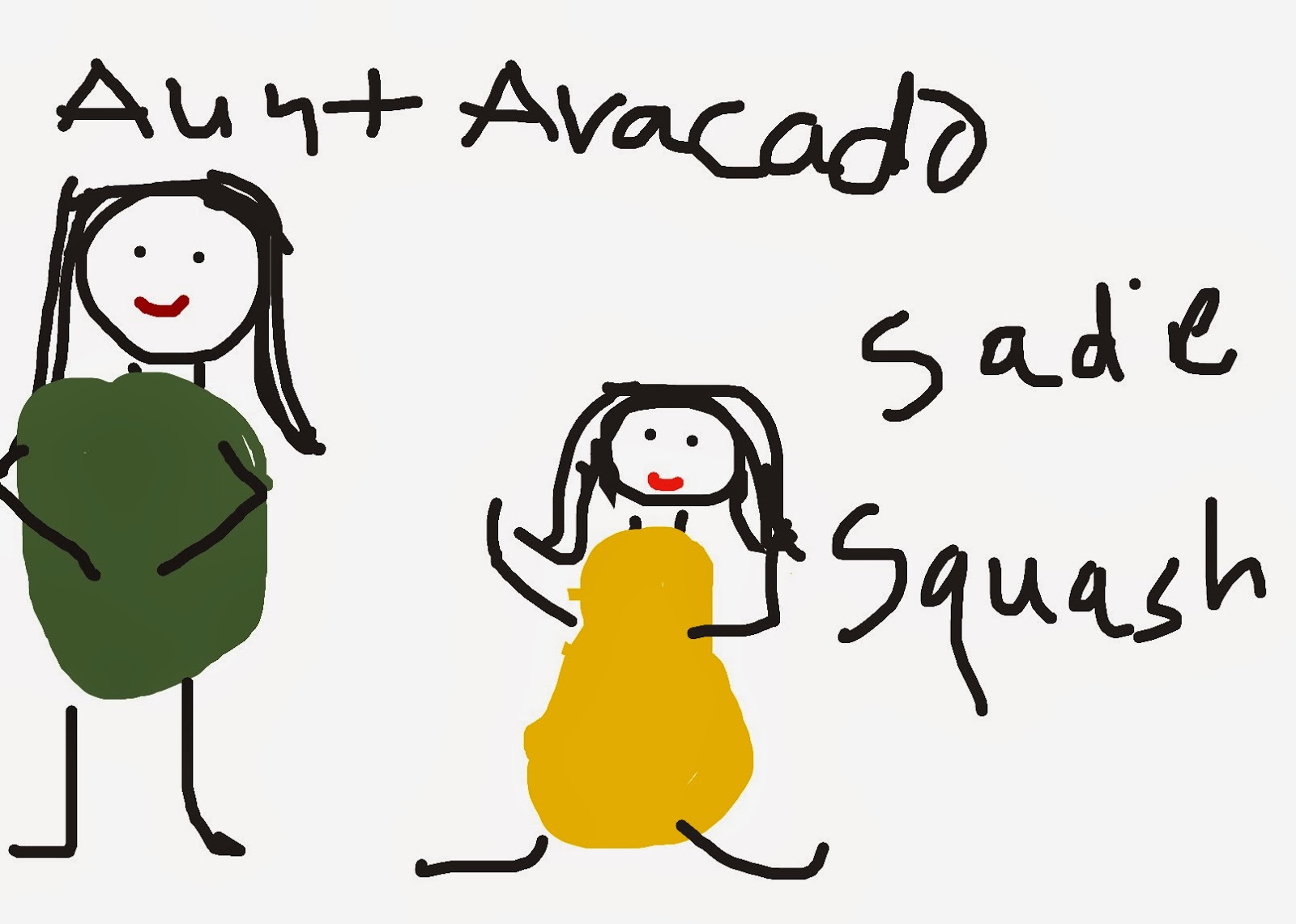
I wrote this blog post because Sadie asked me to write another one about her last week but I never got around to it.  Here is a picture of her modeling her sledding attire.


And here is Sophie's drawing of Sadie and me.


Friday, November 29, 2013

Perfectionism

I consider myself a recovering perfectionist.  I don't think I can ever be cured of it, but I do what I can to keep this part from causing me unnecessary suffering.

Perfectionists come in many varieties.  I am not the type that is meticulous about my appearance or my house.  I don't spend hours on assignments or projects trying to get everything just right.  I am more of the variety that cannot tolerate failing, being terrible at something, or making a mistake. 

I was one of those annoying students who thought that a C was failing.  I didn't get many of them, but when I did I cried hysterically to my professor, begging for some way to redeem myself.  To this day, I think back on the one C I got in college and think, wow I wonder how my life would have been different if had I at least gotten a B in Anthropology.  And then the voice of reality kicks in and reminds me that it wouldn't have made any difference.

It's hard for me to do something I'm terrible at.  I once went bowling and played two games.  In the first game I scored a 16 and in the second one I scored a 31.  I'm pretty sure that most 5 year olds could score better than that.  And I'm sure that with practice I could improve my average.  But the thought of doing something where I am at risk of embarrassing myself is too anxiety-provoking, and it's easier to choose something that I'm good at like tennis.

Making a mistake--particularly one where I am chastised for doing something wrong--is the hardest of all.  As I indicated in a previous post, criticism sends me into a spiral of anxiety, self-doubt, and shame that far exceeds what might ordinarily be expected from the actual remark, which might be something as innocuous as "I thought that ball was in."  I never forget a mistake, and I try never to make the same mistake twice.

Blogging has been an opportunity to practice something that I do well--writing and talking about myself--along with something where I have no idea what I'm doing---promoting my blog.  While the writing part is going surprisingly well, the promoting part is a constant source of stress. 

For example, I did not realize that publishing multiple posts in a community in a short period of time constitutes spam, and when you do this the administer of the site will remove your posts.  Which means I broke the rules and have been punished accordingly.  Now I'm terrified of doing anything out of fear that I may unknowingly further violate protocol.

So I've decided to take a break from promotion and write a blog post instead.  This is the part I really like, anyway.  And I'm trying to remind myself that it is OK to make mistakes.  That no one knows what they're doing before they do it.  That it doesn't make me a bad person.  That I don't have to be perfect.

And then I took an Ativan, because that's what my psychiatrist told me to do when I'm having an anxiety attack.


Sunday, November 24, 2013

The Inner Critic

While I spend a lot of my time with the drill sergeant, the inner critic is my constant companion.  The two of them are great friends and they often like to show up together:  the drill sergeant will tell me what I should be doing, and the inner critic will give a running commentary of what a terrible job I'm doing.

Take this morning, for example.  I finally felt well enough to get out of bed and eat, so I was looking forward to making some coffee and oatmeal.  I even had enough energy last night to do the dishes.  One of the dishes was that plate that goes in the microwave that lets the food rotate while it cooks. 
So I was putting that plate back in the microwave, and I guess I must have hit the front glass on the door because the entire glass panel shattered, spraying shards everywhere. 

The inner critic had a field day with this.  Look at what you've done!  You're so uncoordinated, you can't even put the plate in the microwave without destroying the whole thing.  Now you have to clean up all the glass and you better make sure there isn't a single shard anywhere.  And now you're going to have to buy a new microwave so don't think that you have any spending money this month.

I am trying to practice acceptance of this part of myself but this one is tough because it just seems abusive.  It seems like the inner critic wants me to be perfect so that nothing bad ever happens, but that doesn't make me feel any compassion toward it.  I guess I need to think about this one some more.

The best I have been able to do is to channel my inner optimist to counteract the inner critic.  I've needed her a lot the last few days since I've been sick at home alone with no one to check on me.  Plus now I have two light bulbs out, so my place is even darker than it was last weekend.

So the optimist jumps right in whenever the inner critic talks and says things like, well at least the glass didn't get in your eyes and blind you.  Or you could have gotten cut badly and had to go to the emergency room.  And now you have a good excuse to call your friend over to change your light bulbs because he will have to install the microwave, too.  So really it all worked out for the best. 

Tomorrow I'm going microwave shopping.  I've talked to my friend and he's going to come over next Sunday and play handyman for me.  And I finally felt well enough today to play tennis and even had dinner with a friend.  All in all, after a shaky start, it ending up being a pretty good day.

So take that, inner critic!


Saturday, November 23, 2013

Meet the Drill Sergeant

I am now about to introduce you to one of my most challenging parts.  I call this part the drill sergeant.  Many of you may have a similar part.  My drill sergeant demands productivity at all costs, and not in a nice way.

I am not a morning person, as I indicated in my first post.  The drill sergeant doesn't give a crap.  He (I think of it as a he) doesn't give a crap if it's a weekend, either; he still wants me to get up.  I don't listen to him, of course, but I pay the price.  For every extra hour of sleep I try to get, the drill sergeant yells at me, telling me how other people are up doing normal people productive things, while I am lying in bed wasting my life away. 

It doesn't matter if I don't have anything pressing to do.  The drill sergeant will make up random to do lists as though these things are of the utmost importance.  You need to wash those bath mats! There are scraps of paper all over the house that need to be put in the recycling!  I'm pretty sure there's a mug in the sink that needs to be washed!  Get up!

I have been sick for the last few days, which is very frustrating for the drill sergeant.  I always get sick at this time of the year because, despite my best attempts to manage the stress of my job, I still get exhausted and can't function.  The drill sergeant is frustrated because I was just two days from making it to Thanksgiving break, but I had to miss a day of work, anyway.  And I have to say, that frustrates me, too.  But what can I do?  I don't even feel like playing tennis.  Or eating!  If you know me, you know that's bad.

In my efforts to practice self-acceptance, I'm trying to get to know the drill sergeant better, understand his point of view.  I can see how he's trying to prevent me from a life of sloth-hood.  And I do have to wake up early to get to work.  And sometimes you really do need your drill sergeant, like when you have to channel your inner warrior on the tennis court.

So I've struck a deal with my drill sergeant.  As long as I am waking up when I need to, fulfilling my obligations, and being a productive member of society, he can be at ease.  But I have promised to call upon him when I am in need of some ass-kicking motivation. 

So far, it seems to be working.

This doodle reflects my less positive emotional state at the moment.  I think it looks like some kind of scary octopus with floating eyeballs, albeit in pretty colors.


Tuesday, November 19, 2013

Self-Acceptance

Today I was looking for blogs on self-acceptance that are similar to mine, and there really aren't any.  Interestingly, most self-acceptance blogs specifically deal with acceptance of your body.  Apparently that's the main thing people have trouble with.  I guess I'm in the right business. 

Anyway, I realized that the phrase self-acceptance only appears once in my entire blog, and that's in the little blurb on the top of the first page, so I figured I better correct that.  This probably should have been the first post, but oh well.  Better late than never.

I believe that, no matter how well-adjusted someone is, everyone has a part of them that tries to make them feel bad about themselves.  Call this part what you want--your inner demon, your inner critic, your superego--but there's no question that it's there.  And there are lots of other parts of us, too--children, warriors, and rock stars, just to name a few.  And just like in real relationships, sometimes these parts don't get along.

We are often at war with ourselves: there are parts of us that we do everything in our power to get rid of and hide from the rest of the world.  That's why people want and fear therapy at the same time.  On the one hand, we think, hey wouldn't it be great if I told someone my deep, dark secrets and she said I wasn't crazy?  But at the same time we think, but what if she does think I'm crazy? That would be terrible.  That's why it's always a courageous thing when someone goes to therapy.

Therapists have the luxury of hiding behind their professional status if they want to.  You don't want to seem too crazy, or no one will want to come see you.  But if you seem too perfect, then it's hard for clients to relate to you.  Although I want to be transparent, I know I err on the side of seeming perfect because it feels safer that way.

But as I get older,  I want to be more honest about who I am and accepting of all my flaws, and I want to do this in a way that inspires other people do the same.  It's always better to show someone how to do something than it is to tell them how to do it, so that's why I started this blog. 

Sometimes it's still terrifying to publish some of these posts, but when someone tells me that they  related to one them, that they think just like I do, then I know I'm doing the right thing.

Since some of you liked my last doodle, I thought I'd post another one for you.


Wednesday, November 13, 2013

Warriorism

I captained 5 tennis leagues this year, which most people would describe as an exercise in torture.  Rescheduling matches is a pain, and it's hard to make everyone happy, but for the most part I enjoy it.  I see it as an opportunity to be a sports psychologist. 

One of the messages I try to instill is the idea that, just as we all have inner children (Sophie, for me) we also have an inner warrior.  Granted, some warriors are more deeply buried and out of shape than others.  For those players on the team, we have the Warrior in Training program (WIT).  A good time to channel your inner warrior is when there is a crucial point, like serving at 30-40 at 3-3. 

The levels of warriorism have evolved over the years.  Last year I had an asthma attack during a singles match.  I'd had a few of them before but I just assumed I was out of shape.  But my friends saw that my lips turned blue and I was wheezing, so after the match they told me I was having an asthma attack and that I should have retired.  It was this match that made me finally go to the doctor, which is how I found out that, in addition to allergies and exercise-induced asthma, I also have GERD. 

For these reasons, I no longer play singles.  But at the time, I just thought I needed an extra-strength dose of warriorism.   I channeled my inner drill sergeant (we all have one of those, too) and started yelling at myself:  soldiers in the jungles of Vietnam didn't get to quit.  They had to deal with fatigue and lack of sleep and mosquitos and rain and fear of getting killed.  So what if you can't breathe?  So what if you're losing?  So what if you can't move?  You still have to finish the match!

My friends thought is was so funny that I used soldiers in the jungles of Vietnam for motivation that this became our new rally cry.  Before a team mate got on the court, we would yell "jungles of Vietnam!"  Later this got abbreviated to jungles for short.  I even got my team mates pins to put on their tennis bags with the word JUNGLES on it in an army-looking font. 

I also found some monkeys and apes, so I bought those, too.  I would have preferred a variety of jungle animals, but it was pretty amazing that they sold apes and monkeys at all, with exactly 12 per pack--one for each team member.  Even more amazing is that I was able to pick a monkey that represented each player.  So then our rally cry became ape and monkey calls for those team members who can imitate them.  I can't so I still yell jungles.

The last level of warriorism is when you are in the trenches of the jungles of Vietnam.  This would apply when you've lost the first set and are down match point in the second set.  Or when you haven't slept in over 24 hours and have to play at districts in the deciding match, which happened to me this past summer.  Because it requires you to channel so deeply, this level should only be used in dire circumstances.

I remember at the end of that match, after mentally preparing myself for battle the entire day and spending a good amount of time in the trenches, I was shocked that we still ended up losing.   Then I realized that in war, there are warriors on both sides, and half of them will lose.  In fact, a bunch of warriors on the winning side will get killed, too.  So it's not a fail-proof strategy.

Still, if I'm going to be in the trenches, I'd rather be there with my warrior in charge than any other part.


Monday, October 28, 2013

Children

One of the few perks of being middle-aged is that people stop pressuring you to have kids.  I still get the occasional, "you never know: my mom had me when I was 45," but for the most part people have stopped asking.  Not being married helps, too.

Along with the divorces, not having kids is another thing makes me feel like I'm doing something wrong with my life.  You're supposed to have kids--the Bible says so.  And if you're a scientist, then evolutionary theory says so.  In my defense, I did try.  Or at least I didn't try to prevent pregnancy.  But I am relieved that I didn't get pregnant.

It's not that I don't like kids.  I love kids.  I would rather play with the kids at a party than have to interact with the adults.  And I'm really good at playing with them, too.  I get all into it.  It's not hard, since a part of me is really still a child.  I even have a name for my inner child; I call her Sophie.  She is part of the internal family I mentioned in one of my first blogs.

I know some of you may be thinking I'm crazy right now, but the truth is we all have parts of us that almost seem like separate people, and they don't all see eye-to-eye.  That's why we can argue with ourselves about why we've stayed in this terrible relationship for so long or why we ate that entire bag of Oreos.  I am sure you can think of at least one time when you were absolutely dumbfounded about why you made such a terrible decision.  And you probably cursed yourself for doing so, too.

Anyway, Sophie gets along really well with my niece, who is 7.  In fact, just this weekend my niece wanted to pretend that we were sisters.   However, the adult in me finds this level of intensive play exhausting, and I can see why parents go to bed so early.  Perhaps the reason why I am a night owl is because I don't have children.

Even though this is not where I thought I would be at 44, for the most part I am OK with it.  Sophie got to carve a pumpkin with two of my other nieces when I went to BSG, and I got to introduce my youngest niece to football this past weekend.  And she had a great time, even though we lost.

In fact, this post is dedicated to her because she asked me to write about her.


Tuesday, September 24, 2013

Night Owl Syndrome

I spend a lot of my waking hours thinking about sleep.  I have to be vigilant about getting to bed at a reasonable hour, which for me is before 1 am.  This is difficult because I am a night owl, and I have to make myself go to sleep during the part of the day that I most enjoy just because the world revolves around the early bird's schedule.  Plus people judge me for staying up late and waking up late.  I consider this a form of prejudice and discrimination that Ben Franklin is at least partly to blame.

I read recently that night owls are more prone to feeling depressed because they are forced to conform to an unnatural sleep cycle.  I would have to agree because four out of six of the people in my family are night owls and we all have mood disorders.  To make matters worse, people with mood disorders are sensitive to disruptions in sleep because they can trigger a depressive episode. 

It's a lot of work trying to make myself sleep early.  I have to take at least 1 mg of Ativan every night, sometimes 2.  I am also prone to anxiety, and at night I'm rushing around trying to do all these things to minimize my stress for the next day like take a shower, dry my hair, pack my lunch, set the coffee maker, pick out my clothes, pack my tennis stuff, stretch, etc. 

The problem is that doing all of this stuff to reduce my stress is also stressful, so I end up being wired before going to bed.  Kind of like when you have an exam and you've spent all night studying and by the time you go to bed formulas and vocabulary words and theories are still running through your head. 

So then I have to do all of this stuff to try to exhaust my brain--usually some kind of mind game.  I used to do Minesweeper, but I get so pissed off when I make a mistake that I have to keep playing until I win, or at least have to guess 50/50 on the last square, which means I end up staying up later than I intended.  Lately I've been doing the expert level of Sudoku because it's still challenging and doesn't take as long and you can make 3 mistakes and still win. 

But it's hard to get myself to stop playing even after I win.  I am really competitive, and I have this need to train myself  to concentrate even though I'm exhausted.  Like it's some kind of military mind exercise or something.  I have to talk to that competitive part like it's a child and say something like, OK we agreed that you can play until 12:30 so you have to put the game away now.  I'll tell you more about my internal family in another post.

I also need more than the average amount of sleep--more like 9 or 10 hours--which makes getting enough sleep a challenge.  Usually I can squeeze in a cat nap in at lunch, and sometimes I can get in another hour or so if I have an opening in my schedule. 

But then I feel guilty because I'm sleeping at work.  And even when I have the time to sleep late, wake up late, and take a nap and have permission to take the Ativan as needed I still feel guilty because I feel like I'm not living life correctly or something.  I'm not doing what normal people do.

My job has really picked up in the last few weeks, and it's only going to get busier from here, so I have no choice but to try to be an early bird, at least during the week.  So far so good, though. Even though I had two tennis matches last night, I was in bed by 12:30.  And because I didn't have a 9 or 10 am appointment, I was able to sleep until 9.  And I don't feel guilty about it.  So I'm feeling pretty good at the moment.

Night Owl
Dreaming Heart Photography (dreamingheart.com)